
Energy Efficiency Ratings Explained for New Boilers
If you’ve started researching new boilers, you’ve almost certainly come across efficiency ratings and wondered what they actually mean in practice.

Why you can trust our content
We understand that the boiler industry can be confusing, with plenty of outdated or misleading information. That’s why we rely only on trusted, proven sources to guide our advice and installations:
Labels like “A-rated” and “ErP” get used frequently in product descriptions and sales conversations, but without context, they don’t tell you very much. Understanding what these ratings represent and how they affect your home’s heating performance is genuinely useful knowledge when you’re making a significant purchase decision.
This guide explains boiler energy efficiency ratings in plain terms, so you can make sense of the figures and use them to compare your options with confidence.
If you’d like advice on the most efficient boiler options for your property, speak to the team at Pettifer Plumbing & Heating.
What Is the ErP Rating System?
ErP stands for Energy-related Products, a Europe-wide directive that introduced a standardised efficiency labelling system for heating appliances. In the UK, the ErP rating is the primary benchmark used to measure and compare boiler efficiency, and it has effectively replaced the older SEDBUK (Seasonal Efficiency of Domestic Boilers in the UK) system that many homeowners will remember seeing on older boiler literature.
Under the ErP system, boilers are graded on a scale from A+++ down to G. The vast majority of modern condensing boilers sit within the A band, meaning they operate at high efficiency and recover heat from flue gases that older non-condensing models would simply expel into the atmosphere. A G-rated boiler, by contrast, converts significantly less of its fuel into usable heat, which has a direct impact on running costs over time.
How Do Efficiency Ratings Translate to Real-World Performance?
A boiler’s ErP rating is expressed as a seasonal space heating efficiency percentage. In simple terms, this figure tells you how much of the energy the boiler consumes is actually converted into heat for your home. The higher the percentage, the less fuel is wasted.
A highly efficient A-rated boiler operating at around 90% seasonal efficiency or above will waste far less energy than an older G-rated unit running at around 70% or below. While the exact difference in running costs depends on your home’s size, usage patterns and fuel type, the general principle is straightforward: the higher the rating, the more of every pound spent on fuel actually heats your home rather than disappearing through the flue.
It’s worth noting that ErP ratings reflect typical seasonal performance rather than peak laboratory conditions, making them a more realistic guide for homeowners than some earlier measurement methods.
What Does Condensing Technology Have to Do With Efficiency?
All new gas boilers fitted in the UK must be condensing models, as required by Building Regulations. This is directly connected to efficiency. Condensing boilers include a secondary heat exchanger that recovers latent heat from the flue gases before they leave the system, which is what enables them to achieve the high efficiency levels reflected in their A-rated ErP scores.
When a condensing boiler is working at its most efficient, water vapour in the flue gas condenses back into liquid form (which is what gives the technology its name), releasing additional heat energy in the process. This recovered energy is fed back into the heating circuit rather than being lost. The visible result is often a small amount of steam or condensate dripping from the external flue, which is entirely normal and a sign the boiler is operating as intended.
|
Boiler Type |
ErP Rating Band |
Condensing Technology |
Typical Seasonal Efficiency |
|---|---|---|---|
|
Modern condensing gas boiler |
A |
Yes |
High |
|
Older non-condensing gas boiler |
D to G |
No |
Significantly lower |
|
Modern condensing oil boiler |
A |
Yes |
High |
|
Older conventional oil boiler |
D to G |
No |
Significantly lower |
Which fuel powers your boiler?
Mains Gas
LPG
Oil
It just takes 60 Seconds
And then you can book a free consultation
Does the ErP Rating Alone Tell You Everything?
Efficiency ratings are an important benchmark, but they don’t give you the full picture on their own. Two A-rated boilers from different manufacturers may carry similar ErP scores while differing considerably in build quality, reliability and the quality of components used internally.
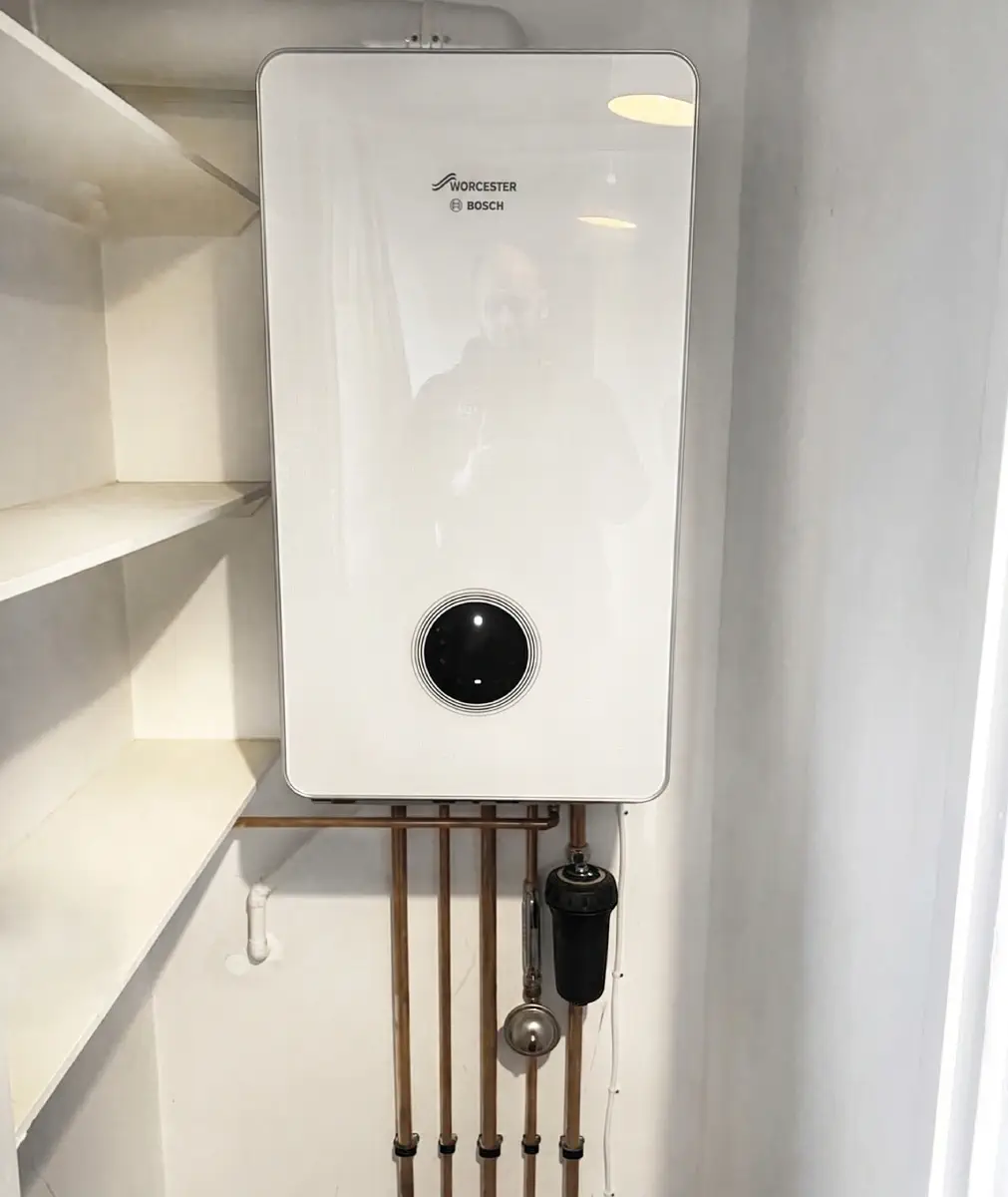
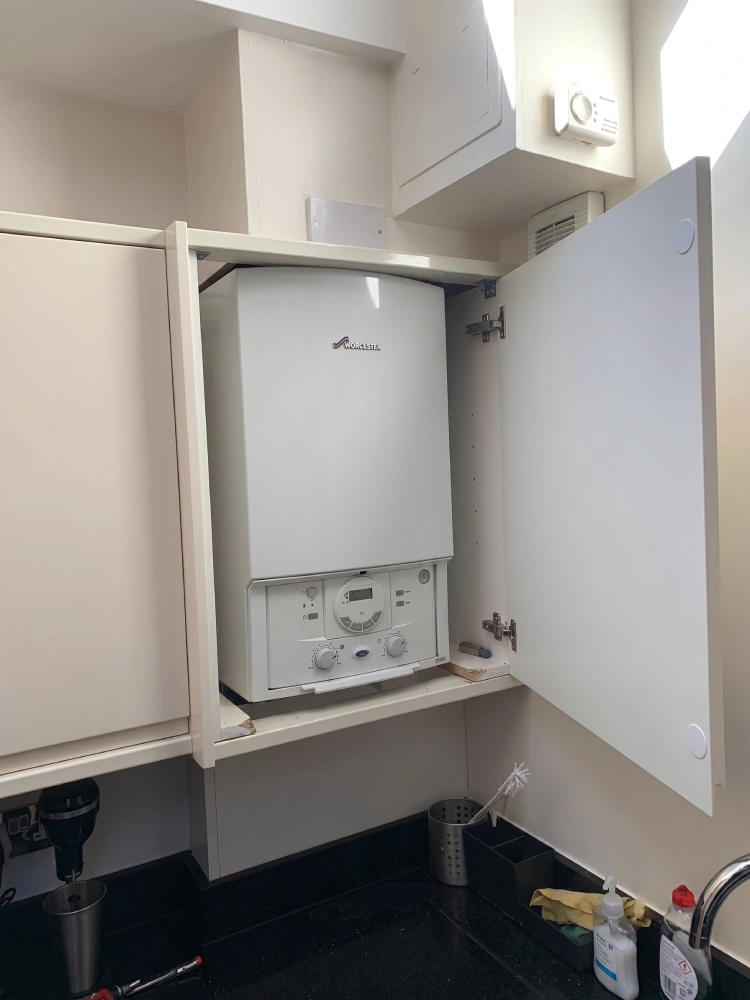
This is where brand reputation becomes relevant alongside the efficiency label. A highly rated boiler from a manufacturer with a strong track record and robust aftermarket support will generally outperform a similarly labelled unit from a lesser-known brand over a full service life. Pettifer Plumbing & Heating recommends Worcester Bosch as the primary choice for most domestic properties in Enfield, with Vaillant and Ideal as strong alternatives at different price points, precisely because all three brands combine good efficiency credentials with proven reliability.
How Smart Controls Can Improve Real-World Efficiency
An A-rated boiler running on a poorly optimised heating schedule will still waste energy unnecessarily. This is where smart controls and weather compensation technology add genuine value beyond what the ErP label captures.
Smart thermostats allow you to programme your heating around your actual routine, reducing periods where the boiler fires up when nobody is at home or the house is already at a comfortable temperature. Weather compensation takes this further by automatically reducing the boiler’s flow temperature on milder days, which keeps the system running at peak condensing efficiency rather than cycling on and off at higher temperatures than the conditions actually require.
If you’re investing in a new combi boiler installation in Enfield, pairing it with smart controls from the outset is one of the most straightforward ways to ensure the rated efficiency is reflected in your actual energy use day to day.
Final Thoughts
Energy efficiency ratings give you a reliable starting point for comparing new boilers, but they work best when understood alongside brand quality, smart control options and proper system sizing. An A-rated boiler, correctly specified, well fitted and paired with the right controls, is genuinely one of the most impactful improvements you can make to your home’s comfort and running costs.
For expert advice on energy-efficient new boiler installation across Enfield and the surrounding Hertfordshire area, get in touch with Pettifer Plumbing & Heating. We’ll help you find the right system for your home, with honest guidance and no hidden costs.
Related articles

Which fuel powers your boiler?
Mains Gas
LPG
Oil
At a glance
Labels like “A-rated” and “ErP” get used frequently in product descriptions and sales conversations, but without context, they don’t tell you very much. Understanding what these ratings represent and how they affect your home’s heating performance is genuinely useful knowledge when you’re making a significant purchase decision.
This guide explains boiler energy efficiency ratings in plain terms, so you can make sense of the figures and use them to compare your options with confidence.
If you’d like advice on the most efficient boiler options for your property, speak to the team at Pettifer Plumbing & Heating.
What Is the ErP Rating System?
ErP stands for Energy-related Products, a Europe-wide directive that introduced a standardised efficiency labelling system for heating appliances. In the UK, the ErP rating is the primary benchmark used to measure and compare boiler efficiency, and it has effectively replaced the older SEDBUK (Seasonal Efficiency of Domestic Boilers in the UK) system that many homeowners will remember seeing on older boiler literature.
Under the ErP system, boilers are graded on a scale from A+++ down to G. The vast majority of modern condensing boilers sit within the A band, meaning they operate at high efficiency and recover heat from flue gases that older non-condensing models would simply expel into the atmosphere. A G-rated boiler, by contrast, converts significantly less of its fuel into usable heat, which has a direct impact on running costs over time.
How Do Efficiency Ratings Translate to Real-World Performance?
A boiler’s ErP rating is expressed as a seasonal space heating efficiency percentage. In simple terms, this figure tells you how much of the energy the boiler consumes is actually converted into heat for your home. The higher the percentage, the less fuel is wasted.
A highly efficient A-rated boiler operating at around 90% seasonal efficiency or above will waste far less energy than an older G-rated unit running at around 70% or below. While the exact difference in running costs depends on your home’s size, usage patterns and fuel type, the general principle is straightforward: the higher the rating, the more of every pound spent on fuel actually heats your home rather than disappearing through the flue.
It’s worth noting that ErP ratings reflect typical seasonal performance rather than peak laboratory conditions, making them a more realistic guide for homeowners than some earlier measurement methods.
What Does Condensing Technology Have to Do With Efficiency?
All new gas boilers fitted in the UK must be condensing models, as required by Building Regulations. This is directly connected to efficiency. Condensing boilers include a secondary heat exchanger that recovers latent heat from the flue gases before they leave the system, which is what enables them to achieve the high efficiency levels reflected in their A-rated ErP scores.
When a condensing boiler is working at its most efficient, water vapour in the flue gas condenses back into liquid form (which is what gives the technology its name), releasing additional heat energy in the process. This recovered energy is fed back into the heating circuit rather than being lost. The visible result is often a small amount of steam or condensate dripping from the external flue, which is entirely normal and a sign the boiler is operating as intended.
|
Boiler Type |
ErP Rating Band |
Condensing Technology |
Typical Seasonal Efficiency |
|---|---|---|---|
|
Modern condensing gas boiler |
A |
Yes |
High |
|
Older non-condensing gas boiler |
D to G |
No |
Significantly lower |
|
Modern condensing oil boiler |
A |
Yes |
High |
|
Older conventional oil boiler |
D to G |
No |
Significantly lower |
Which fuel powers your boiler?
Mains Gas
LPG
Oil
It just takes 60 Seconds
And then you can book a free consultation
Does the ErP Rating Alone Tell You Everything?
Efficiency ratings are an important benchmark, but they don’t give you the full picture on their own. Two A-rated boilers from different manufacturers may carry similar ErP scores while differing considerably in build quality, reliability and the quality of components used internally.
This is where brand reputation becomes relevant alongside the efficiency label. A highly rated boiler from a manufacturer with a strong track record and robust aftermarket support will generally outperform a similarly labelled unit from a lesser-known brand over a full service life. Pettifer Plumbing & Heating recommends Worcester Bosch as the primary choice for most domestic properties in Enfield, with Vaillant and Ideal as strong alternatives at different price points, precisely because all three brands combine good efficiency credentials with proven reliability.
How Smart Controls Can Improve Real-World Efficiency
An A-rated boiler running on a poorly optimised heating schedule will still waste energy unnecessarily. This is where smart controls and weather compensation technology add genuine value beyond what the ErP label captures.
Smart thermostats allow you to programme your heating around your actual routine, reducing periods where the boiler fires up when nobody is at home or the house is already at a comfortable temperature. Weather compensation takes this further by automatically reducing the boiler’s flow temperature on milder days, which keeps the system running at peak condensing efficiency rather than cycling on and off at higher temperatures than the conditions actually require.
If you’re investing in a new combi boiler installation in Enfield, pairing it with smart controls from the outset is one of the most straightforward ways to ensure the rated efficiency is reflected in your actual energy use day to day.
Final Thoughts
Energy efficiency ratings give you a reliable starting point for comparing new boilers, but they work best when understood alongside brand quality, smart control options and proper system sizing. An A-rated boiler, correctly specified, well fitted and paired with the right controls, is genuinely one of the most impactful improvements you can make to your home’s comfort and running costs.
For expert advice on energy-efficient new boiler installation across Enfield and the surrounding Hertfordshire area, get in touch with Pettifer Plumbing & Heating. We’ll help you find the right system for your home, with honest guidance and no hidden costs.